

Choosing the right commercial sent machine is more than selecting a device with an attractive design. For businesses, the right home fragrance systems should deliver consistent fragrance performance, cover the intended space, operate reliably, and meet the specific needs of the application.
Whether you are sourcing equipment for hotels, retail stores, offices, shopping malls, or scent marketing projects, understanding the differences between air fragrance diffuser can help you make a better purchasing decision.
For importers, wholesalers, distributors, and commercial buyers, this guide covers the key factors to consider before investing in a professional oil diffuser.
Before comparing products, determine where and how the diffuser will be used. Different commercial environments have different requirements for fragrance coverage, operating hours, installation, and maintenance.
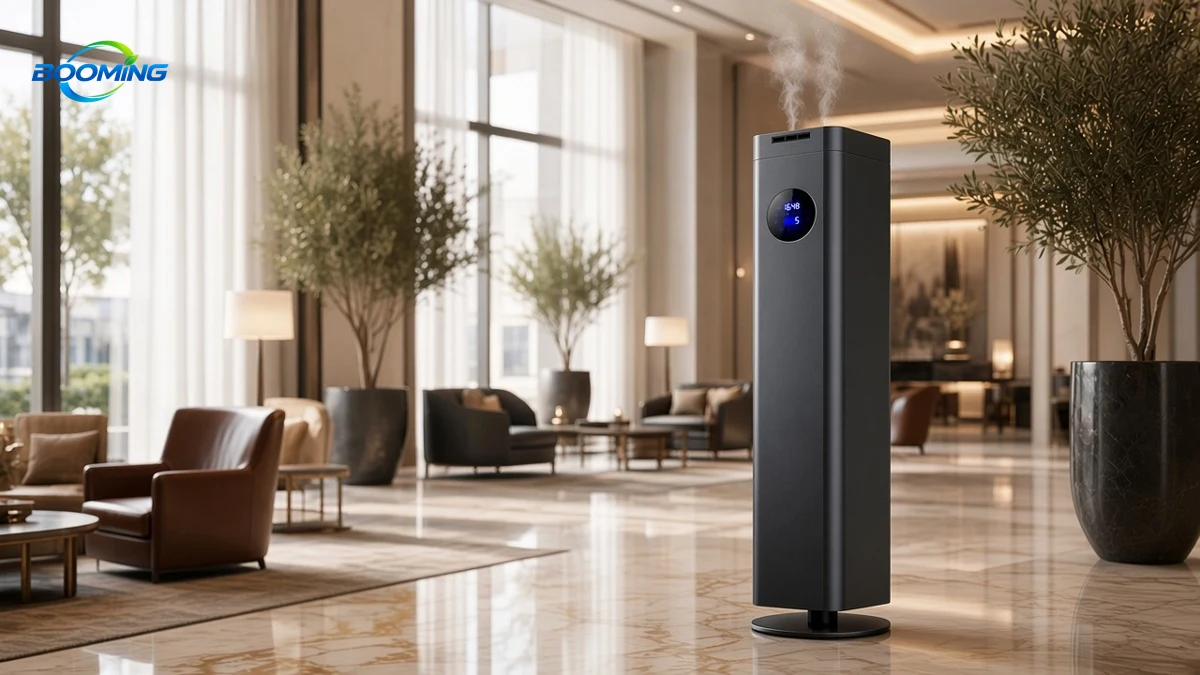
Explore our [Commercial Aroma Diffuser Collection] to discover professional scenting solutions for different business applications.
Hotels often use scent diffusion in lobbies, reception areas, corridors, and guest facilities to create a welcoming atmosphere.
For these applications, look for a commercial scent machine with:
Consistent fragrance output throughout operating hours
Quiet operation suitable for guest environments
Programmable working schedules
Sufficient fragrance capacity for extended use
Flexible installation options
Retail environments use ambient scenting to create a recognizable shopping experience and reinforce brand identity.
A suitable system should offer adjustable fragrance intensity, reliable performance, and coverage appropriate for the store layout.
For larger retail spaces, centralized or hvac aromatherapy system may also be worth considering.
Office environments generally require controlled fragrance distribution without excessive intensity.
Consider low-noise operation, adjustable settings, convenient maintenance, and the ability to schedule operating periods.
These environments may require different fragrance settings depending on room size, ventilation, and business hours.
An oil diffuser with flexible output control and easy maintenance can help businesses manage their scenting requirements.
Not all aroma diffusers use the same technology. Understanding the differences helps you select a system that matches your commercial requirements.
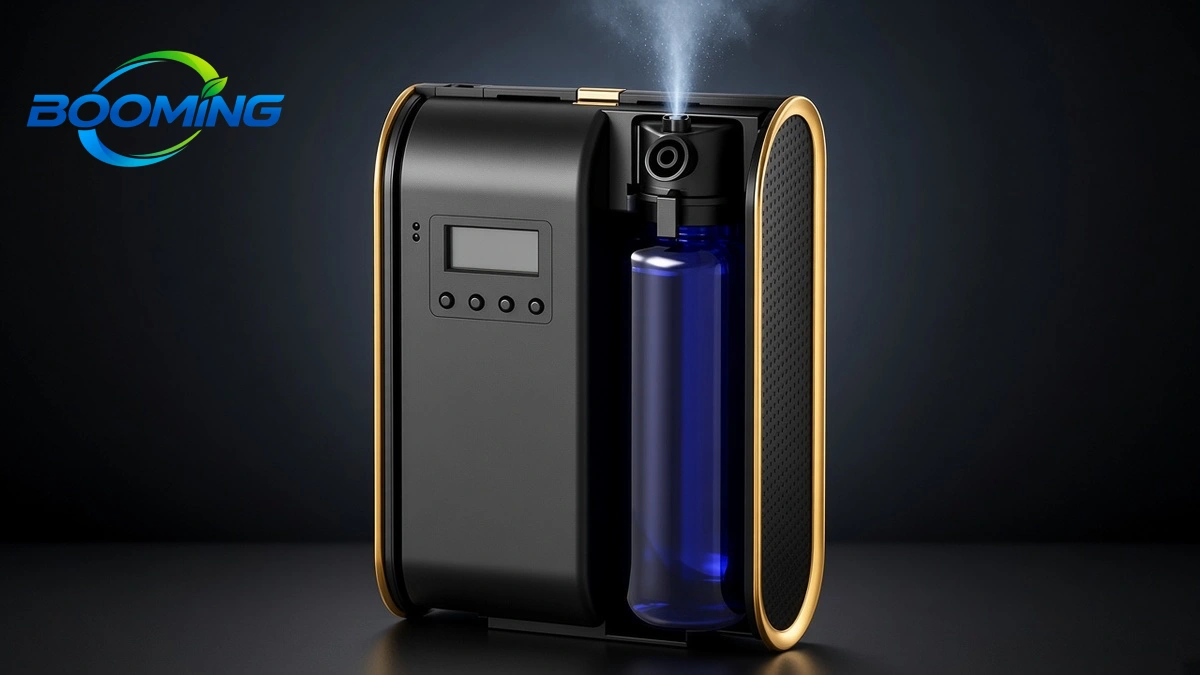
Looking for professional equipment? Discover our [Cold Air Scent Diffuser] and explore available product configurations.
Cold-air nebulizing technology uses airflow to break fragrance oil into fine particles without requiring water or heat in the diffusion process.
It is commonly used in professional scent diffusion equipment because it can distribute fragrance directly from compatible fragrance oils.
Potential advantages include:
No water required for operation
No heating element involved in the diffusion process
Adjustable fragrance output on compatible models
Suitable for many commercial scenting applications
This technology is particularly worth considering for hotels, retail spaces, offices, and other commercial environments.
Ultrasonic diffusers use high-frequency vibrations to create a fine mist, typically from a mixture of water and essential oil.
They are commonly found in smaller residential and decorative applications.
Compared with professional cold-air nebulizing systems, ultrasonic models generally have different operating requirements, fragrance output characteristics, and maintenance needs.
Which technology should you choose?
If your business needs a professional fragrance distribution solution for commercial environments, cold-air nebulizing technology is often a strong option. However, the final choice should depend on the application, required coverage, fragrance compatibility, and operating costs.
Coverage is one of the most important factors when selecting a commercial scent machine.
Choosing a unit that is too small may result in insufficient fragrance distribution. An oversized system may increase operating costs and produce an unnecessarily strong fragrance environment.
Before purchasing, consider the following:
Total floor area
Ceiling height
Room layout and partitions
Air circulation and ventilation
Number of operating hours per day
Desired fragrance intensity
Manufacturers often provide recommended coverage areas in square feet or square meters.
However, these figures should be treated as reference values rather than guaranteed results. Actual fragrance performance depends on environmental conditions and installation.
For example, an open hotel lobby with high ceilings may require a different solution from an enclosed office of the same floor area.
For larger commercial projects, ask your supplier to recommend equipment based on the actual floor plan and ventilation conditions.
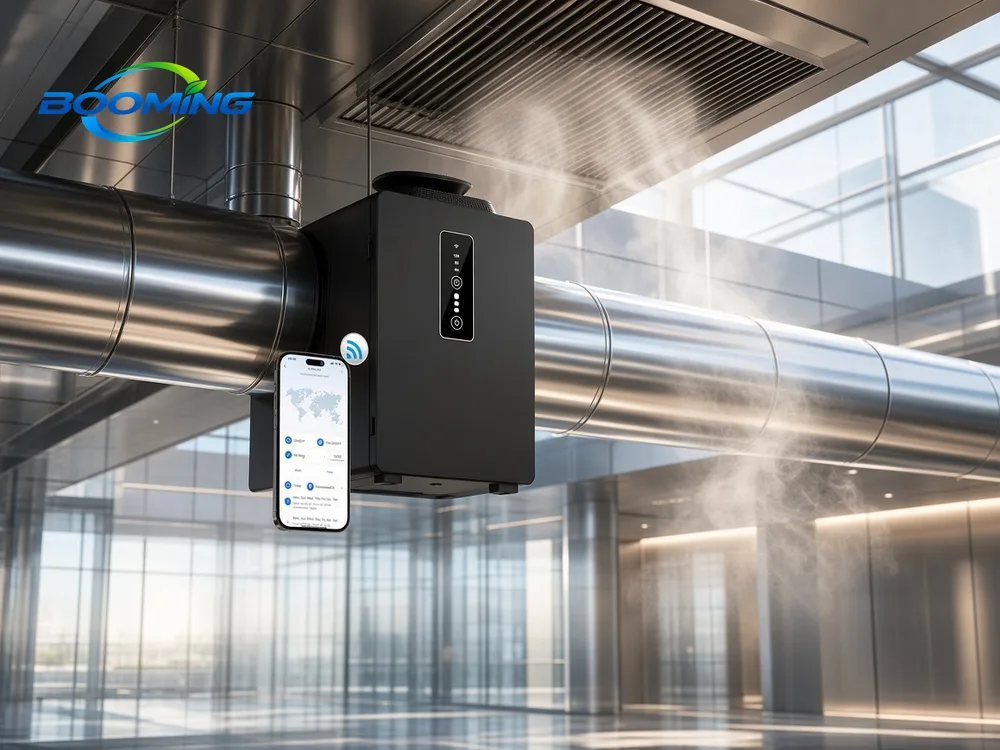
For shopping malls, hotels, office buildings, and other large facilities, HVAC scenting can be an effective option.
These systems are designed to work with compatible ventilation and air distribution setups, helping distribute fragrance across connected areas.
Before selecting a HVAC diffuser, confirm installation requirements, airflow compatibility, equipment specifications, and whether professional installation is necessary.
Contact [BOOMING's Commercial Scent Machine Team] to explore more[HVAC Diffuser] products for your project.
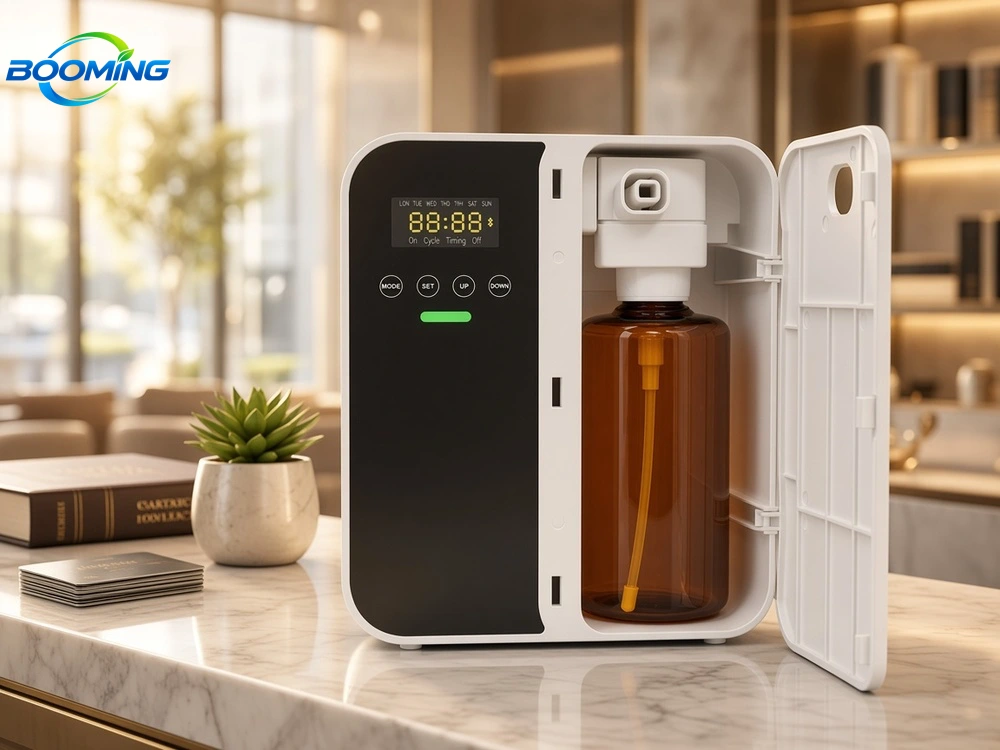
[Request Product Specifications] to learn more about our available models.
Fragrance capacity directly affects how frequently a commercial scent machine needs refilling.
For businesses operating multiple devices or running scenting programs throughout the day, maintenance frequency can have a significant impact on operating costs.
Consider these factors:
A larger fragrance container may reduce refill frequency, especially in locations with long operating hours.
However, capacity should be evaluated together with fragrance consumption and the actual usage schedule.
Ask the manufacturer for the estimated fragrance consumption rate under different operating settings.
A programmable diffuser with adjustable output can help businesses control fragrance usage according to their operating schedule.
Check how easy it is to:
Refill or replace fragrance containers
Clean internal components
Adjust fragrance output
Replace consumable parts
Access the control system
For distributors and commercial operators, choosing equipment with straightforward maintenance can reduce after-sales service costs.
Modern commercial scent machine may offer different control options depending on the model.
When comparing products, consider whether the equipment supports:
Adjustable fragrance intensity
Programmable operating schedules
Multiple working and resting intervals
Manual control
Remote or app-based control, where available
Automatic restart after a power interruption, where supported
For hotels, retail chains, and commercial property operators, programmable settings can make it easier to manage multiple locations and maintain consistent operating schedules.
Not every project needs advanced connectivity. Choose features according to the actual needs of your customers rather than paying for functions they may never use.
For B2B buyers, product reliability is just as important as initial purchase price.
A commercial scent machine may operate for many hours each day, so its materials, internal components, and overall construction deserve careful evaluation.
Before placing a bulk order, ask your supplier about:
Check the housing material, internal components, connection quality, and overall assembly.
Metal housing may be preferred for certain commercial applications, while other projects may prioritize lightweight construction or a specific appearance.
Confirm that the voltage, frequency, plug type, and power requirements are suitable for the destination market.
Depending on the product configuration and destination country, buyers may need to review applicable electrical safety, electromagnetic compatibility, and environmental compliance requirements.
Always verify the actual test reports and certificates for the specific product model. Do not assume that every product from the same supplier carries identical certifications.
For bulk purchasing, ask about production inspection procedures, functional testing, packaging standards, and warranty terms.
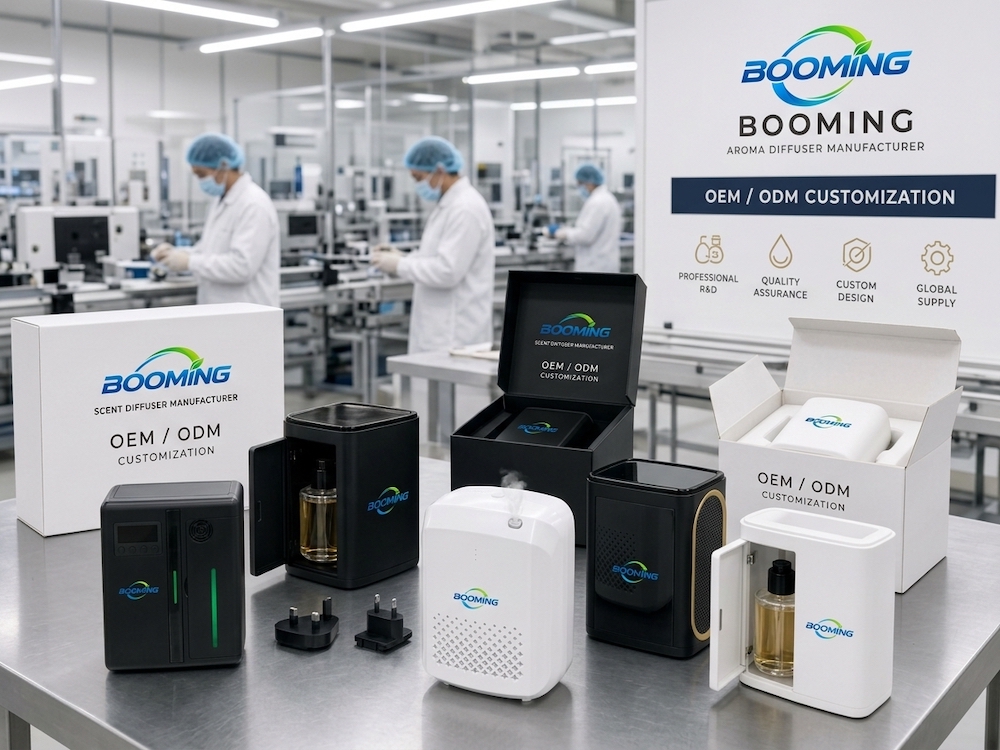
If you are an importer, wholesaler, distributor, or private-label brand, customization may be an important part of your sourcing strategy.
A capable commercial aroma diffuser manufacturer should be able to discuss customization requirements before mass production.
Common OEM/ODM options include:
Custom logo printing or branding
Customized product colors and housing finishes
Tailored packaging and instruction manuals
Customized product configurations
Selected functional or structural modifications, subject to technical feasibility
When evaluating suppliers, ask about minimum order quantities, sample availability, tooling requirements, production lead times, and quality assurance procedures.
A supplier with clear customization processes can help you develop products that better match your target market and brand positioning.
Selecting the right commercial aroma diffuser is only part of the purchasing decision. Choosing a reliable manufacturing partner is equally important.
For overseas buyers, consider the following questions:
Does the supplier have experience manufacturing commercial aroma diffusers?
Can they provide detailed product specifications and real product samples?
Do they support OEM and ODM customization?
Can they provide relevant compliance documentation?
What is their production capacity and typical lead time?
What warranty and after-sales support do they offer?
Can they maintain consistent product quality across repeat orders?
Requesting samples and evaluating supplier communication before placing a large order can help reduce sourcing risks.
Whether you are building your own brand or expanding your product portfolio, learn more about our [OEM/ODM Manufacturing Capabilities].
Before confirming your purchase, use this checklist to compare different models and suppliers.
| Evaluation Factor | What to Confirm |
|---|---|
| Application | Hotel, retail, office, spa, or other commercial space |
| Coverage | Recommended area and installation conditions |
| Technology | Cold-air nebulizing or ultrasonic |
| Fragrance Capacity | Bottle size and refill requirements |
| Consumption | Estimated fragrance usage |
| Controls | Output adjustment and scheduling |
| Installation | Standalone, wall-mounted, or HVAC-compatible |
| Materials | Housing and internal component quality |
| Compliance | Applicable destination-market requirements |
| Customization | Logo, color, packaging, and OEM/ODM options |
| Warranty | Coverage period and after-sales support |
| MOQ | Minimum order quantity and bulk pricing |
Comparing these factors will help you identify a solution that balances performance, operating costs, product quality, and long-term business value.
The best commercial scent machine is not necessarily the most expensive or the most advanced model. It is the one that matches your application, coverage requirements, operating conditions, maintenance expectations, and target market.
For importers, wholesalers, distributors, and commercial project buyers, working with an experienced manufacturer can make product selection, customization, and long-term supply more manageable.
At BOOMING, we focus on commercial scent machines and support business customers with OEM/ODM customization solutions. Whether you are developing a private-label product line or sourcing equipment for commercial scenting projects, our team can help you explore suitable product options.
Looking for a reliable commercial scent machine supplier?
Contact BOOMING to discuss your application, target market, customization requirements, and wholesale purchasing needs.
Get in touch with our team to request product specifications, samples, and a quotation.